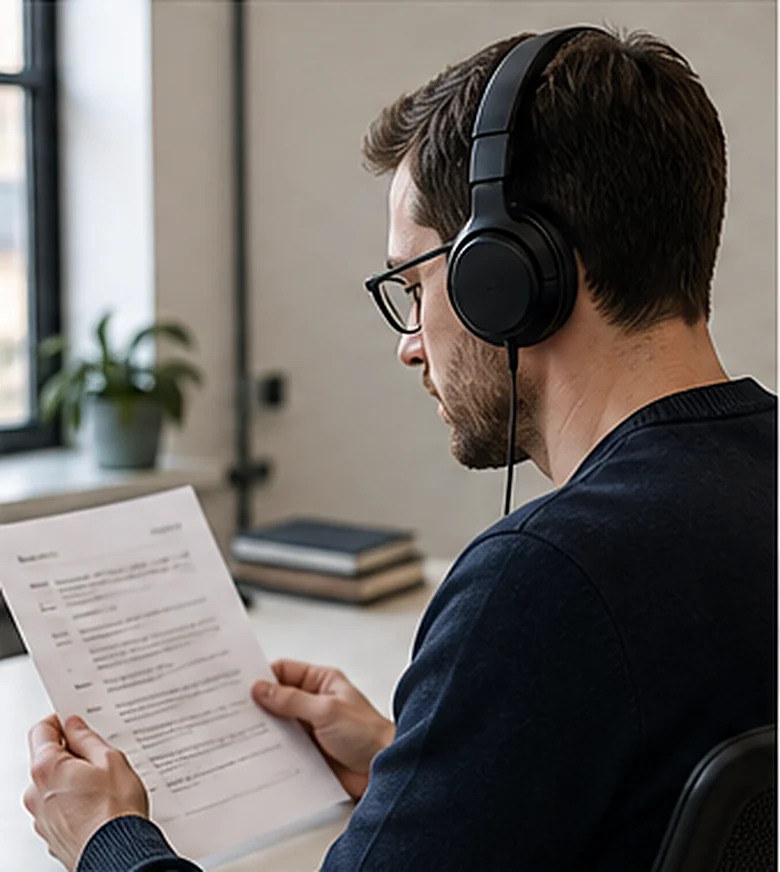
What is the difference between an AI moderator and a human moderator?
A human moderator is a trained person who runs each interview live, reads the room and decides what to ask next. An AI moderator is software that follows your research guide, asks the questions, probes the answers and records everything, without a calendar slot for each conversation.
The practical difference is not intelligence, it is capacity. A person can run a handful of sessions a day. An AI moderator can run as many conversations at once as your participants are willing to start.
- Human moderator: scheduled sessions, one at a time, strong judgment, higher cost per interview.
- AI moderator: a link that participants open when they want, many conversations in parallel, consistent questions, lower cost per interview.
When is a human moderator the better choice?
Choose a person when the cost of misreading the moment is high. Grief, health, money trouble, workplace conflict and anything else where a participant might need a pause, a kind word or a change of direction belongs with someone who can see a face and respond like a person.
A human is also better when you do not yet know what you are asking. Early discovery work is about noticing the odd comment and chasing it. A skilled moderator can abandon the guide halfway through and follow it. An AI moderator works best when you can state what you want to learn.
- Sensitive or emotional topics.
- Exploratory studies where the question is still forming.
- Interviews with senior stakeholders where rapport and reputation matter.
- Sessions that depend on watching behavior, such as a physical product in someone's hands.
- Group dynamics, where one person's reaction changes another's answer.
When is an AI moderator the better choice?
Choose AI when the question is clear and the bottleneck is volume or time. Typical examples are asking recent customers why they chose you, asking churned customers why they left, testing how a new idea lands with fifty people, or checking whether a pattern you saw in five interviews holds up across a hundred.
Consistency is the other advantage. Every participant gets the same opening, the same core questions and the same standard of follow-up. That makes answers easier to compare, because the difference between two transcripts is the customer, not the mood of the moderator that day.
Participants also choose their own moment. Someone can answer at ten at night in their own words, without finding a free hour on a Tuesday. That is why a link often reaches people a calendar invite never does.
- Many interviews in a few days.
- Questions you can write down in advance.
- Follow-up studies after a first round of live interviews.
- Churn, win and loss, onboarding and concept feedback.
- Teams without a dedicated moderator.
You can read how this works in practice on the page about AI moderated interviews.
How do the costs compare?
Exact costs for human moderation vary a lot with the moderator, the length of the session and how much analysis is included, so use your own numbers. Count the moderator's time, the time to schedule and reschedule, note taking or transcription, and the analysis hours afterward. Then divide by the number of interviews.
For the AI side the arithmetic is simple and public. The Team plan is $249 per month and includes 400 chat interviews, so $249 divided by 400 chat interviews is about 62 cents per interview at the Team limit. The Starter plan is $99 per month for 100 chat interviews, about 99 cents per interview at the Starter limit. Voice minutes are counted separately, with 120 on Starter and 300 on Team. Annual billing takes 50 percent off, so Team is $124.50 per month when billed annually. A limit used in a period does not come back, so the per interview figure holds only if you actually use the allowance.
The comparison that matters is not price alone. A live moderator gives you depth per conversation. An AI moderator gives you many conversations. If a decision needs both, spend human hours where judgment matters and let AI cover the rest. See the pricing page for every plan.
Do people answer honestly to an AI moderator?
Some people say more to software than to a person, because there is nobody to impress and nobody to disappoint. Others give shorter answers because the conversation feels less personal. Both happen. What you can control is the guide: ask open questions, ask for specific recent examples, and let the moderator probe when an answer is vague.
Human moderators bring their own bias. A moderator who likes your product can nudge answers without noticing, through a nod, a tone or a leading follow-up. An AI moderator does not get tired in the sixth session of the day and does not have a favorite idea. It can still ask poor questions if the guide is poor, so the quality of the guide matters either way. Our discussion guide template is a good place to start.
- Write open questions, not yes or no questions.
- Ask for the last time something happened, not for general opinions.
- Read a sample of transcripts yourself before trusting a summary.
- Use quotes as evidence, not only theme labels.
How do I choose between them for my study?
Run through four questions before you book anything.
First, can you write the questions down? If yes, AI can run them. If you can only describe a vague area, start with a person.
Second, how many people do you need? Under ten, a human moderator is usually fine. Past twenty or thirty, scheduling alone becomes the main cost, which is where AI saves the most. If you are unsure of the number, read how many user interviews you need in our guide.
Third, how sensitive is the subject? The more personal it is, the more you want a person.
Fourth, how fast do you need an answer? If the decision is due this week, the calendar usually decides for you.
A common pattern is a hybrid. Run five to eight live interviews to find the themes, write a guide from what you learned, then use AI moderators to test those themes with a much larger group of your own customers. You invite participants yourself with a link, so you keep control of who is in the study.
What should you not expect from an AI moderator?
It does not recruit people for you. You bring your own customers or prospects and send them a link. It does not replace the thinking behind the study, so you still need a clear question and a sensible audience. And it does not replace watching someone use a product in person when behavior is the point.
Be honest about the fit. If a study depends on reading body language, build it around a human. If it depends on reaching many people quickly with the same well written questions, AI is a good fit. Our page on how AI moderated research works walks through the steps from guide to findings.