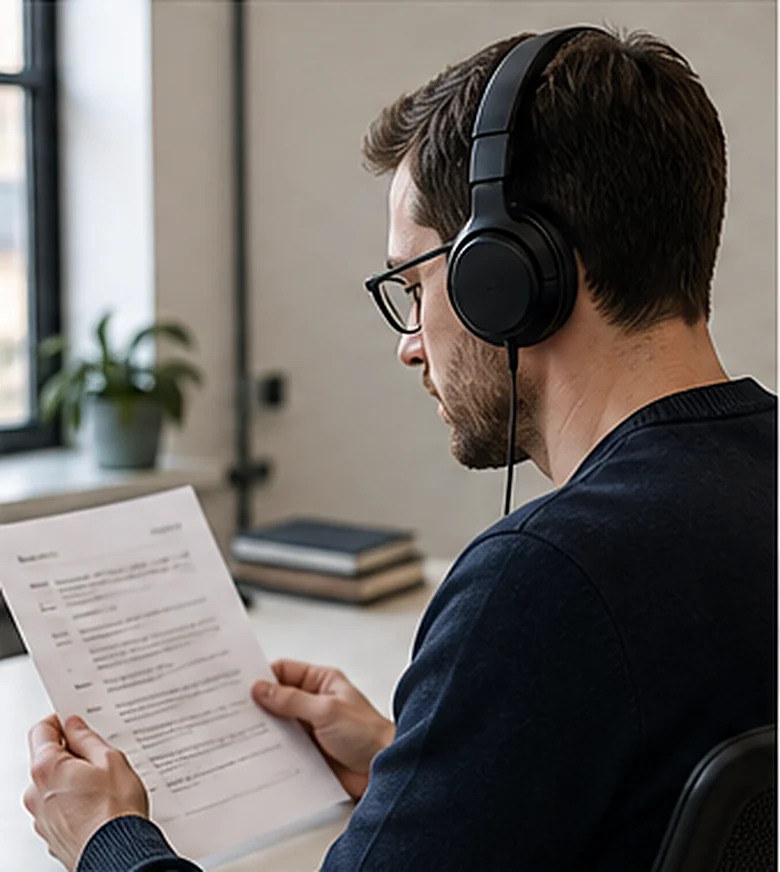
What does a focus group moderator do?
The moderator is not a participant and not an expert in the room. Their job is to create conditions where people speak candidly and to draw out the reasons behind opinions.
- Prepares the discussion guide and the room or call.
- Opens the session and sets ground rules.
- Asks questions and follows up on interesting comments.
- Manages the group so everyone is heard.
- Stays neutral and does not argue or defend.
- Keeps time and closes the session.
- Works with a note taker or a recording so nothing is lost.
A focus group is different from a one to one interview. People respond to each other, which can bring out ideas none of them would have had alone. It can also pull people toward the loudest opinion. The moderator is there to get the value without the distortion.
How do I prepare for a focus group?
Preparation decides most of the outcome.
- Define the decision. What will you do with the findings?
- Choose the group. Aim for people who share a relevant experience but are not close friends. Mixing very different groups often leads to a few people speaking for everyone.
- Pick the size. Small groups give each person more time. Larger groups bring more variety and are harder to manage.
- Write the guide. Plan an opening, a warm-up, five to eight main topics and a closing. Use our discussion guide template.
- Plan time. Sixty to ninety minutes is common for a live group.
- Test the technology if the group is online. Check audio, video and any shared material.
- Arrange recording and consent, and tell participants how their answers will be used.
Send a short note to participants before the session with the time, length and what to expect. It reduces no-shows and sets a friendly tone.
How do I open and run the discussion?
Open warmly and set rules. Say that there are no right answers, that you want honest views including negative ones, that one person speaks at a time and that nothing is personal. Explain that you are neutral and have no stake in the answers.
Start with an easy round where everyone says a few words about themselves. It gets every voice into the room early, which makes later contributions easier.
Move through the guide topic by topic. Use open questions and let the group answer in its own way. Redirect when the talk drifts. Use short bridges such as "That is helpful, now let us look at..." to keep the pace.
- Ask one question at a time.
- Wait through silences. People fill them with useful thoughts.
- Summarize what you heard and ask if it is right.
- Watch the clock and protect time for the key topics.
- Save the most important topics for the middle, not the end, when energy is low.
How do I handle dominant and quiet participants?
Dominant voices and silent participants are the most common problems.
For dominant participants, thank them and invite others. "Thanks, I would like to hear from someone who sees it differently." Use direct questions to people who have not spoken yet. Seating or turn order can help in person. In an online group, call on people by name.
For quiet participants, ask them gently and offer an easy entry. "You mentioned earlier that you use this weekly. How does it fit your week?" Do not put people on the spot with hard questions first. Offer a written round where everyone types a short answer before discussion, so social pressure matters less.
For disagreements, treat them as data. Ask each side to explain their reason, and do not try to settle the argument.
- Keep your tone constant, whatever is said.
- Do not agree or disagree with opinions.
- Avoid praising some answers more than others.
How do I probe without leading?
Probing means asking for more detail on a comment. Use neutral prompts.
- Can you tell us more about that?
- What makes you say that?
- Can anyone give an example?
- Did anyone have a different experience?
- What would you change?
Avoid probes that contain your assumption, such as "So it is too expensive, right?" Ask "What did you think about the price?" instead. The same approach works in one to one conversations, and you will find more wording in our list of customer interview questions.
What should I do afterward?
Capture notes within a day while memory is fresh. Review the recording, mark strong quotes and group comments by topic. Note where the group agreed, where it split and which comments came from one voice only.
Be careful in your claims. A focus group tells you what a small group said and why. It does not tell you how many customers feel the same way. If you need to know how common a view is, follow up with more interviews or a survey.
Where does an AI moderator fit?
A live group has features an AI cannot copy, such as people reacting to each other in the moment. If group interaction is the point, use a human moderator in a live session.
When the goal is to hear many views on the same questions, there is another approach. An AI moderator runs separate conversations with each person through a link, so no one is influenced by a louder voice and no one waits their turn. Each participant answers in their own time, and findings pull themes together with quotes. See AI focus groups and the online focus group platform pages for how this works and what it does not do. You invite your own participants, and the tool does not recruit for you.
A fair comparison:
- Live group: shared energy, reactions between people, higher scheduling cost, risk of dominant voices.
- AI conversations with many people: each voice is heard, no social pressure, flexible timing, no live reactions between participants.
Many teams combine them. A small live group explores the topic, then separate AI-moderated interviews test the themes with more people. For a deeper comparison, see AI moderator vs human moderator.
What is a quick moderator checklist?
- Decision and audience defined.
- Guide with five to eight topics and probes.
- Ground rules ready to say aloud.
- Consent and recording arranged.
- Plan for dominant and quiet voices.
- Neutral wording checked.
- Time marked for each topic.
- Notes captured within a day.