What is moderated testing?
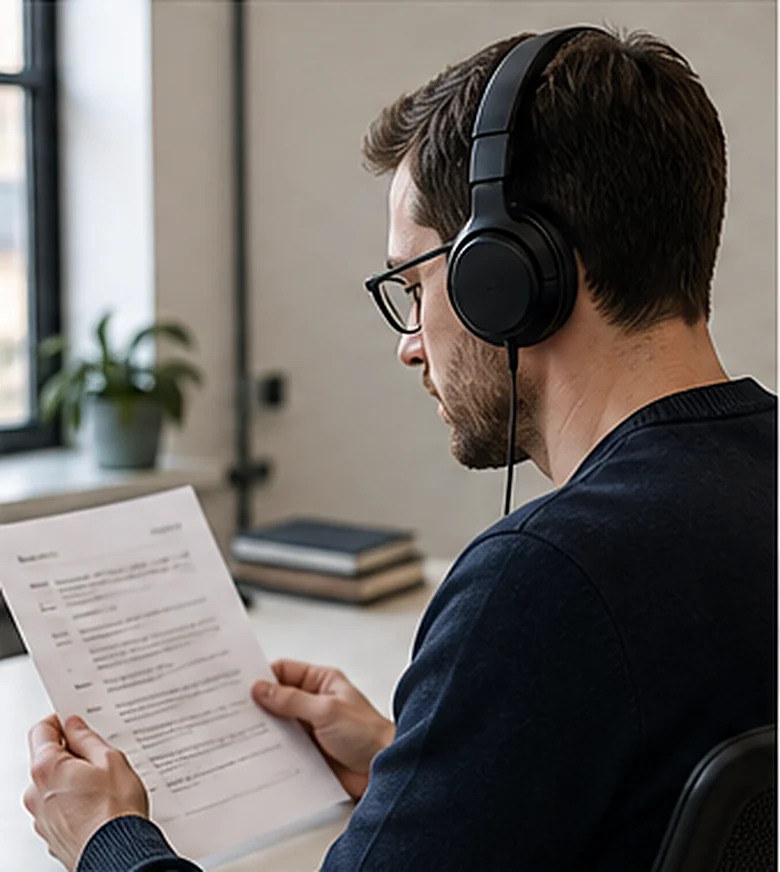
In a moderated session a facilitator talks with the participant while they use a product, a prototype or a concept. The facilitator gives tasks, watches, asks what the person is thinking and follows up on anything surprising. The session happens at a scheduled time, in person or over a call.
The strength is depth. When a participant hesitates, the moderator can ask what they expected to happen. The weakness is capacity: every session takes a person, a slot and a participant at the same time.
What is unmoderated testing?
In an unmoderated test the participant works through instructions alone. They might complete tasks, answer written questions or record their screen. Nobody asks a follow-up in the moment. You review the output afterward.
The strength is scale and speed, because many people can take part at once at any hour. The weakness is that you only get what the instructions asked for. If someone gives a vague answer or struggles for a reason you did not anticipate, nobody is there to dig in.
How do moderated and unmoderated testing compare?
Here is the comparison on the points that usually decide the choice.
- Depth of insight: moderated is stronger because follow-up questions happen in the moment. Unmoderated shows what happened but often not why.
- Speed: unmoderated is faster, since participants do not need a shared time slot. Moderated depends on scheduling.
- Number of participants: unmoderated scales easily. Moderated is limited by moderator hours.
- Cost per participant: unmoderated is usually lower, because no person sits through each session. Moderated costs more per head.
- Control: moderated lets you steer when something unexpected comes up. Unmoderated is only as good as the written instructions.
- Risk of misunderstanding: in unmoderated tests a confusing task can ruin an answer without anyone noticing. In moderated sessions the moderator can clarify.
- Moderator influence: moderated sessions can be shaped by the moderator's tone or leading questions. Unmoderated tests avoid that, but also avoid helpful clarification.
Neither method is better in general. Each answers a different kind of question.
When should I choose moderated testing?
Pick moderated when the reasons matter more than the counts.
- You are exploring a new problem and do not yet know the right questions.
- The product is complex and participants may need a nudge to get started.
- You are testing an early prototype that breaks easily.
- The topic is sensitive and needs human judgment.
- You want to watch how a person behaves, not only what they report.
Our page on moderated usability testing goes deeper on this method.
When should I choose unmoderated testing?
Pick unmoderated when the task is clear and you want more people.
- You want to check whether a specific flow can be completed.
- You are comparing two designs and need a larger group.
- You need quick directional answers before a release.
- Your participants are in many time zones.
- The questions are simple enough that nobody needs to clarify them.
See remote user testing software for how remote studies fit together.
What is AI-moderated testing?
AI-moderated testing keeps the unmoderated advantage of scale and flexible timing, and adds the thing unmoderated tests lack: follow-up questions. Participants open a link, a conversation starts, and the AI moderator asks your questions and probes answers that are short or unclear. Nobody needs to be online at the same time.
This does not turn it into a replacement for a skilled person. It handles conversation well, such as interviews about reasons, experiences and reactions to ideas. It is a poor fit where you must watch hands on a physical object or react to a room. At Moderators, interviews run as chat or voice and you invite your own participants with a link. Details are on the AI moderated interviews page.
- Like moderated: the questions adapt to what the person says.
- Like unmoderated: participants join on their own schedule and many can take part at once.
- Unlike both: the findings are collected with quotes from every transcript, so you can trace each theme to the words that support it.
How do I design a test that works either way?
A few habits make any study better, whichever method you choose.
First, write down the decision the study supports. If you cannot name a decision, the study will produce interesting notes and no action.
Second, write tasks and questions in the participant's language. Avoid internal names for features. If you say "open the workspace switcher" and the product calls it something else, you are testing the label, not the flow.
Third, pilot with one person before launching to everyone. A single pilot catches broken links, confusing wording and tasks that take twice as long as planned.
Fourth, keep the session short. Participants lose focus, and the later answers are weaker than the first.
Fifth, separate observation from interpretation when you take notes. Write what the person did and said first, and write your guess about why separately.
For a ready structure, use the discussion guide template.
Can I combine moderated and unmoderated testing?
Yes, and it is often the strongest design. Start with a small moderated round to find the themes and problems. Turn what you learn into precise tasks and questions. Then run a larger round, unmoderated or AI-moderated, to see how widely the problems appear and how people describe them.
The reverse also works. If a larger unmoderated test shows that many people fail at one step, schedule a few moderated sessions focused on that step to find out why.
A simple sequence for a product team:
- Week one: five to eight moderated sessions to find the main problems.
- Week two: rewrite tasks and questions from what you learned.
- Week two or three: a larger round with many participants.
- Afterward: a few follow-up sessions on the surprises.
The mix keeps the cost of human time on the questions where it pays off. If you are deciding sample sizes, read how many user interviews you need.